

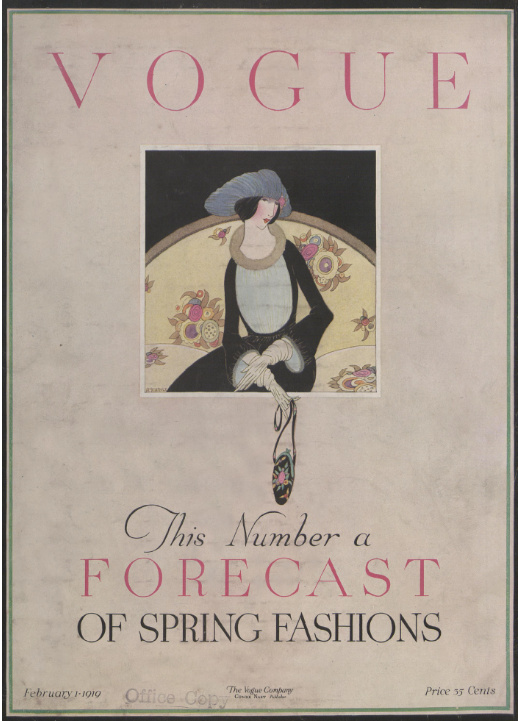
Active from 1915 through the 1950s, illustrator Harriet Meserole is best remembered for her Vogue covers produced during the interwar years, though her career extended across a wide range of publications and commercial formats. She enjoyed a successful freelance practice during a period of profound social and artistic change, quietly navigating a professional landscape that afforded women artists limited visibility and institutional recognition.
Her professional life is documented in the Harriet Meserole Papers held by the Fashion Institute of Technology’s Special Collections and FIT Archive. Donated to FIT in 1989, the collection contains original and published artwork alongside correspondence, photographs, and personal ephemera accumulated over the course of the artist’s life. Though modest in size, the collection offers researchers insight into her working methods, professional affiliations, and longevity as a freelance illustrator. Her oral history interview, recorded in 1981 when she was 88 years old, contextualizes the collection.
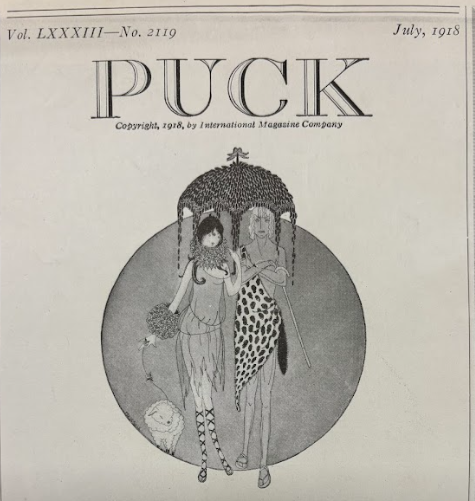
Harriet was born in Troy, NY, in 1893. Shortly after her father’s death when she was 19 years old, she entered a three-year illustration program at Pratt Institute, and took a variety of art courses including fashion illustration. Starting in 1915, for a few years Harriet worked as an artist for Wanamaker’s department store. Her work was also published in the pages of various popular magazines of the time. After repeatedly submitting her work to Vogue for consideration, it was finally selected for the cover of the February 1, 1919 issue. By 1924, Harriet’s artwork had appeared on quite a few Vogue covers, and she had been actively contributing illustrations to the magazine’s interior articles.

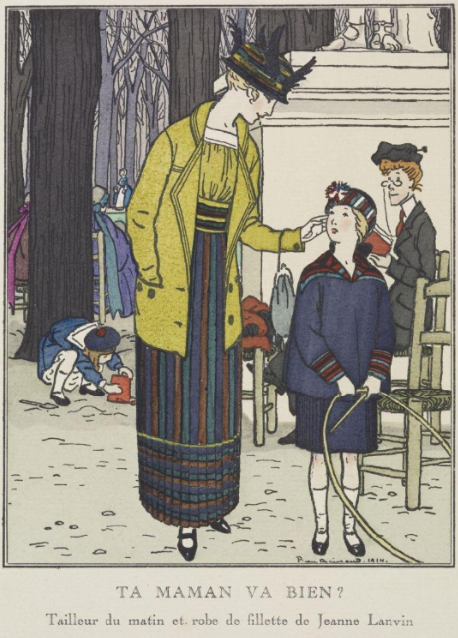
At a very young age, Harriet had found herself at the forefront of significant cultural change, with her work featured on the cover of one of the fastest-growing and most prestigious fashion magazines of her era. In her oral history interview, she credits the Paris publication Gazette du bon ton as a significant inspiration for her style. Gazette du bon ton had reached American soil in the early 1900s, its unique illustrations introducing radical visual talent from Paris. Its printing style and aesthetic had evolved from Japanese prints, and were characterized by flattened forms outlined in black lines. This style of illustration inspired and encouraged young American artists, such as Harriet, to challenge traditional representational models and engage with the emerging Modernist cultural movement, which reached into the Twentieth Century’s changing zeitgeist.
Harriet’s life was not without challenges. She started her career during World War I and managed the difficulties of the Great Depression and World War II as an unmarried woman working as a freelance artist. It is possible that her career was partially supported by inherited wealth and social privilege. Her parents were descendants of the Meserole family, a notable Brooklyn family that, through generations of inheritance and marital alliances, had accumulated substantial landholdings in the modern Greenpoint and Williamsburg neighborhoods of Brooklyn. Harriet’s papers hold ample photographic portraits of her matriarchal aunts, proud cousins, and extended family members dating back into the 1800s. This suggests that Harriet benefited from a degree of inherited wealth and social stability, which may have supported her ability to sustain a freelance career during periods of economic instability.

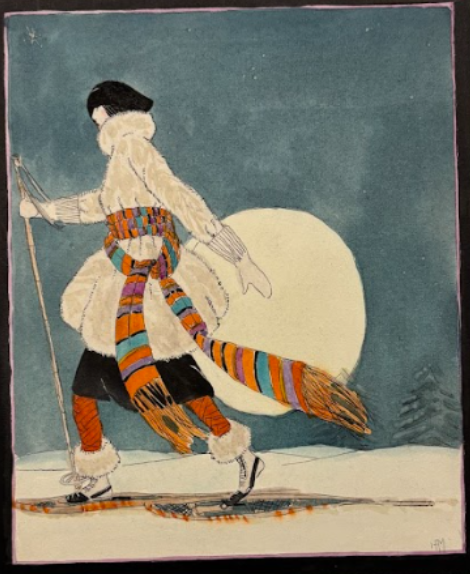
Harriet’s final cover for Vogue was published in June, 1930. That same year, illustrator Carl Erickson (better known as Eric) made his debut on the publication’s cover, showcasing a much looser and more expressive artistic style, which would come to dominate fashion illustration. Two years later, Vogue featured its first photographic, graphically-striking cover image by Edward Steichen. As photographs began to dominate fashion journalism, Harriet transitioned her Vogue-related illustrative work exclusively to Conde Nast’s Vogue Pattern Book.
As she moved away from Vogue’s spotlight, Harriet continued to work as a freelancer, maintaining relationships with numerous other clients. She shifted her focus to surface design after receiving an honorable mention in a design competition hosted by the Museum of Modern Art, titled Organic Design in Home Furnishings. In the 1940s, she also explored textile design for fashion designer Joseph Whitehead; however, available documentation offers limited information about her work in textiles.
Harriet ceased working for Conde Nast titles in the 1950s after a thirty-year relationship. She retired in 1964, although she continued to design greeting cards and children’s books privately. As her work disappeared from magazine covers, her public presence within the fashion world diminished. Overall, Harriet was a highly successful artist deeply dedicated to her work, who helped create momentum for the look of fashion illustration in the early 1900s.
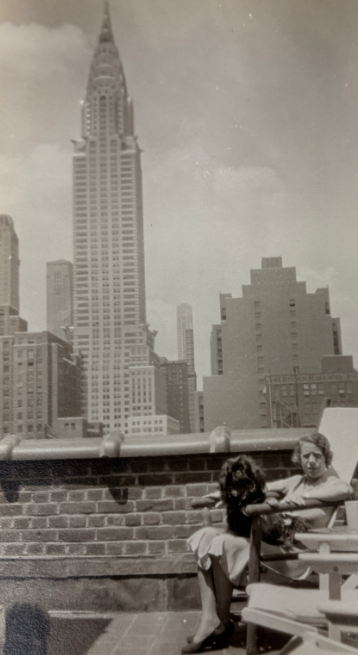
More artwork by Harriet:
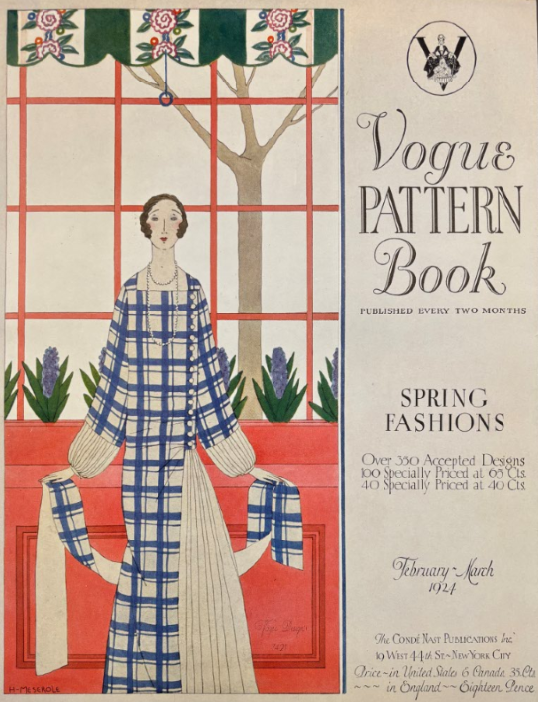
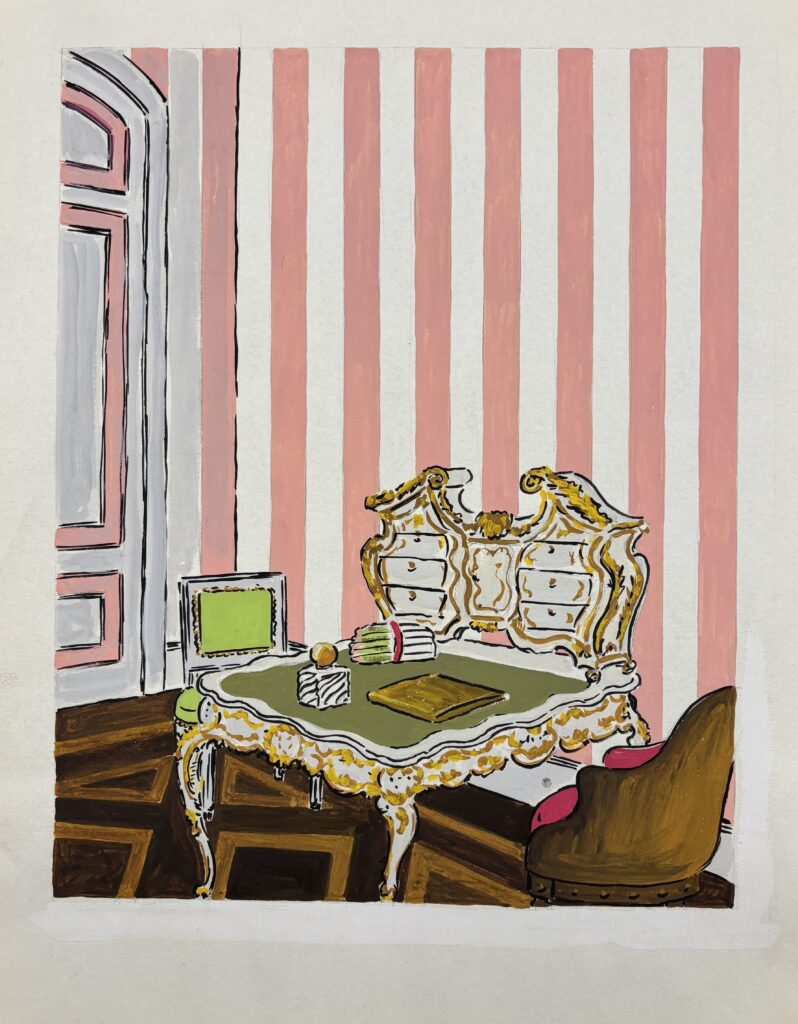

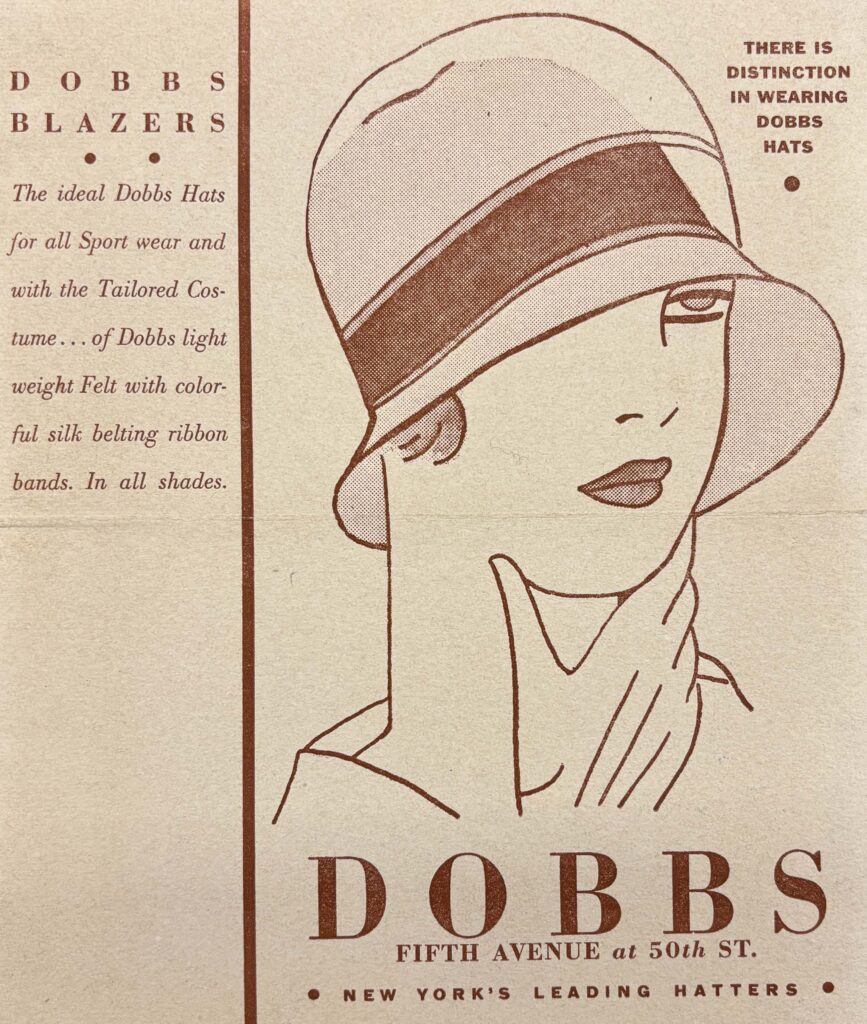
Dig Deeper:
- SC.52 Harriet Meserole papers, FIT Special Collections and FIT Archive.
- Harriet Meserole, “Harriet Meserole Oral History,” interview by John Touhey, October 21, 1981, audio, FIT Special Collections and FIT Archive (link to pdf transcript)
- Meserole Family Papers. Brooklyn, New York, USA, Center for Brooklyn History.
- The Museum of Modern Art. “Organic Design in Home Furnishings | MoMA.” Accessed January 23, 2026.
- F. Eliot Noyes. Organic Design in Home Furnishings Exhibition Catalog. Museum of Modern Art, 1941.
- William Packer. The Art of Vogue Covers. Bonanza Books : Distributed by Crown Publishers, 1985.