BRANDISHING… A 21st Century Brand Weapon

By , May 31, 2012 10:14 am

Brandpsych logoBRANDISHING…  A 21st Century Brand Weapon

Brandishing is becoming a brand-building strategy for designers and products.  So what is it? Brandishing is a strategy of customer-centric “weapons” for competitively positioning brand values. These values must be innovatively brandished:

1. IdentitySelf-Brandualization is the customer brandishing pride…

2. Experience – Brandishing of special experiences and engagements – such as Macy’s “find your magic” special events

3. Relevance – enabling a customer to fit a brand’s style to their own lifestyle… e.g., NIKE’s “just do it”

4. Battle Plan – Empower customers to be fearless, to feel that the brand they choose is a “one-and-only” to help them in their personal wars by having their own “secret”

In this fast-paced century, Brandishing requires a sharper brand sword that can cut through some of the current customer skepticism and disbelief.

The “ultimate driving machine” has to keep moving to higher customer standards and “its amazing what soup can do,” will need to do it even better. If modesty is just a memory, then now “there’s nothing between me and my whatevers!” How long will we believe that “a diamond is forever”? How long will we still “care enough to send the very best”? Thus we must ask: Will we continue to hear the battle cry: “because I’m worth it!” We think yes, if brands understand that customers believe in — Brandishing of the customer — by the customer – for the customer!

The power thrust of a brand is in its brandishing of superiority over and difference within its industry category.

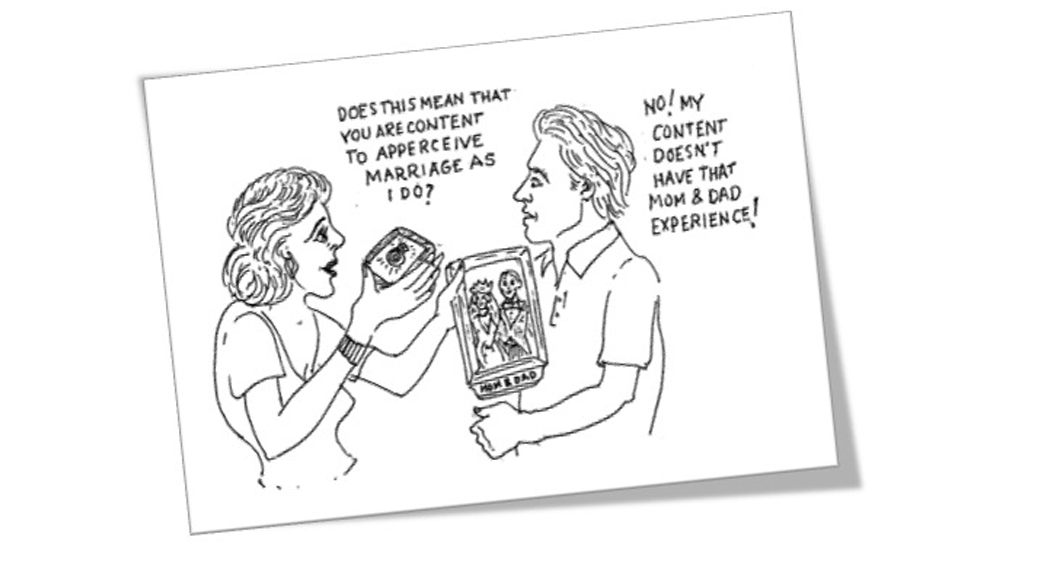
BRANDishing drawing by Arthur Winters

Which brands do you choose to Brandish?


Arthur & Peggy Winters co-teach SXB 200 Brand Marketing Communications for Image & Meaning and SXR 050 Intro to Branding: The Art of Customer Bonding.

THE ERA of the SOLIPSTYLISTIC CUSTOMER Fashion Style By One’s Self

By , April 26, 2012 8:58 am

Brandpsych logo
As we have discussed “My-Style” in a previous blog, we see a development toward what we might call: the Solipsistic Customer. Having a sense that “one can only be aware of one’s own experiences and state of mind,” this customer can now do on-line and in-store self-styling like never before! So what’s happening to the changing shopping behavior? Just ask the emerging neuro-marketers and the fashion companies who see this as an opportunity to make stronger connections with their customers. Is self-styling fashion for one’s self a product of the varieties of brain enhancement that are now happening in the research labs? Can we ever know or better understand our customers?

The neuro-marketers may be creating brand strategies and neuro-experiences designed to depolarize the neural membranes in the part of the brain known for long-standing brand loyalties. This is calculated to make its cells more excitable and more responsive to “solipstylistic” branding. Some brand managers are consulting with neuroscientists to learn how to accelerate the formation of new neural pathways to brand acceptance. They believe that they need to change the need for design-help to solipstyling by one’s self.

For example, FashionizeYourself.co is a Toronto website which provides stimuli for How You Can be In Fashion. It features thinking straight from elite designers and fashion artists. It also offers answers to questions about current fashion websites and blogs.

There are now many ways for the Solipstylistic Customer to do it herself. With these developing concepts, the fashion designer-partner and the share-the-experience store may get back in the act!

This could be the ultimate in One-to-One marketing.

Arthur Winters drawing

Drawing by Arthur Winters. Many young children demand to choose their clothing with the often heard line: “By Myself!” This desire continues on into adulthood when searching for personal styles and trends featured on fashion and media websites.


fashionizeyourself co web

“A girl with the dragoon tattoo “– Film – fashion inspiration for H&M

“A girl with the dragoon tattoo “– Film – fashion inspiration for H&M

Self-styler: Madonna in Givenchy Haute Couture at Super Bowl Halftime Show

Self-styler: Madonna in Givenchy Haute Couture at Super Bowl Halftime Show

Spring - Summer Ad Campaigns 2012 (Part II)

Spring - Summer Ad Campaigns 2012 (Part II)

Spring - Summer 2012 Ad Campaigns (Part I)

Spring - Summer 2012 Ad Campaigns (Part I)

Trend Forecast from the Menswear AW 2012-13

Trend Forecast from the Menswear AW 2012-13

Arthur & Peggy Winters co-teach SXB 200 Brand Marketing Communications for Image & Meaning and SXR 050 Intro to Branding: The Art of Customer Bonding.

REINVENTING the WHEEL of FASHION

By , March 29, 2012 8:00 am

Brandpsych logo

What turns the Wheel of Fashion?
We think that it is ever-rolling change.

Reinventing the Wheel of Fashion drawing by Art Winters

drawing by Art Winters

drawing by Art Winters

For example, designer Alexa Galler is giving the woman’s T-shirt a new Worth by designing “asymmetrical” shapes that could be cocktail party attire….” She is also making “different silhouettes” for men’s khakis, button-downs, and blazers.  Her Ecco Domani awarded collection: “Eighteenth,” is taking a basic item and wheeling it into “Reinvented Fashion.”

As the wheel turns towards different Hierarchies of consumer needs, designer Wes Gordon relies on fashion history for his peplum shapes and floor-length cuts.  His objective here is “my own style Engagementwith present customers and their engagements with potential customers.

Another spoke in the Fashion Wheel speaks of Expectations. For example, comfort is now the most prevalent attribute expected in jean brands.  All of this is designed to create Loyalty – which is being measured by designer and store brands use of Customer Loyalty Metrics (CLM).

CLM is a brand’s analytical research conducted to identify degrees of loyalty based upon the customer’s perception of the Fashion WHEEL.  As mentioned above, designer Wes Gordon has developed remarkable customer loyalty by Reinventing his own WHEEL.  In his own words, he has revived traditional work-style fashions for Jones New York with his “sharp tailoring and cool materials.”

Among the many new fashion directions that may now ride on a whole new Hierarchy is the MADMEN Collection by Banana Republic.  What could be more appealing to the fashion-fit than finding styles that fit?

Mad Men for Banana Republic

And finally, some Fashion Wheel Expectation and excitement at Baby Gap and Gap Kids!  Diane von Furstenberg is designing adorably cute styles and fabrics to burst into spring 2012!  Can we hope for this Fashion Wheel to roll into The Gap for grownups too?

 DVF for Baby GAP and GAP KIDS

 DVF for Baby GAP and GAP KIDS

Arthur & Peggy Winters co-teach SXB 200 Brand Marketing Communications for Image & Meaning and SXR 050 Intro to Branding: The Art of Customer Bonding.

You Talkin’ 2 Me?

By , February 23, 2012 8:54 am

Brandpsych logo
Talkin-2-Me content on social media has reinvented retailing.
Interactive digital innovations have enabled fashion brands and retailers to reorient shopping behaviors designed for multi-level retailing. By utilizing opportunities for talkin’ between brand-2-customer and customer-2-customer, the fashion industries have also changed merchandising production time-lines and supply lines.

By Talkin’-2-U about self-styling, many fashion brands are getting more and more ROI from their use of social media. We are now experiencing Talkin’-2-Me strategic content that offers on-line customer-centric promotions (CCP), e.g., members only sales and events, and provides unique customer experiences (CX), e.g., instant shopping options.

Drawing by Arthur Winters

drawing by Dr. Arthur Winters… who thanks Robert DeNiro for “Taxi Driver”

As designers are live-streaming their fashion shows, they are able to talk intimately with their digital attendees. Social Media Talkin’-2-Me content has effectively created communications that benefit fashion brands from promotional to luxury levels… for genuine cultural exchanges in retailing. Luxury and premium fashion brands had been criticized for their reluctance to get online. This was often because they did not want to be perceived as mass-market brands. But now, they are creating unique content for social media and initiating their own style of creative strategies for online retailing. They are inventing new mobile interfaces and online experiential marketing models that encourage interactive responses from customers who thank the brands for Talkin’-2-Me!

We have observed that luxury brands have found their techno-egos and are eager to build and grow their multi channel presence. Many brands are being helped by the newer social networking sites like: Pinterest. Pioneered by Bergdorf Goodman and Nordstrom, Pinterest makes posting and sharing pictures easier than other sites. It also has an invite-only strategy providing a feeling of exclusivity for the more affluent customer.

Heuristics is the process of discovery, learning and invention. We see the social media development and integration in brand marketing as a most helpful aide in the delight and joy of discovery, as it opens up the fashion conversation Brand-2-Customer.

BrandPsych Resources:
WWD.com and the Women’s Wear Daily Digital Forum
Mashable.com – Macala Wright Lee / Samantha Murphy
LuxuryDaily.com – Rachel Lamb

Arthur & Peggy Winters co-teach SXB 200 Brand Marketing Communications for Image & Meaning and SXR 050 Intro to Branding: The Art of Customer Bonding.

GUERRILLA MARKETING

By , January 26, 2012 7:00 am

FOUR WHAT-NOW CREATIVE STRATEGIES

Guerrilla Drawing by Arthur Winters

Drawing by Arthur Winters

You say Guerrilla, I say Viral, he says Flash Mob, and she says Crowd Sourcing … Maybe we should say: “Let’s call the whole thing off”? But, the proverbial genie is out of the bottle and we can’t stop the race launched forward by social networking and all things experiential.

1. MISSION MINDING – Minding the brand mission now means paying continuous attention to communicating the brand mission clearly, especially through social media. Here’s where you learn “what-now” is the brand’s story in consumers’ minds, and to use this to create new breakthrough creative strategies.

2. BRAND RECRUITING – Recruiting an army of customers who can enlist consumers is now a prime marketing objective. Instead of a movie star or celebrity athlete telling the brand story, guerrilla marketing strategies are created to encourage loyal customers to communicate “what-nows” to recruit other consumers/customers/users.

3. AWARDING BRAND BRAVERY – Tactics for awarding products or services to customers who create interactions of their own to win consumers to their favorite brand: A mission-driven brand should search for, recognize and reward those who have made that brand mission their own.

4. POSITIONING SPECIAL FORCES – Guerrilla marketers recognize that their approach to marketing needs to move toward the front lines. They use “what-now” breakthroughs rather than relying on past strategies, tactics and executions for positioning power. Creative strategies can encourage loyal customers to create stronger referral maneuvers.

It’s one of the realities in today’s brand management that guerrilla marketing is an ongoing reinvention of what works now in social media, public relations, e-tailing and customer experience. “What’s –now” must precede an ongoing what’s next. Largely due to the predominance of social media, branding strategies can be about giving your loyalists an incentive to enlist others in the brand wars.

Creative guerrilla marketing wins over potential customers who come in contact with this brand’s story – Big Pilot Watches. The breakthrough strategy places the product/brand onto a person’s wrist while they are on an airport transport bus. Also a good city transit campaign that works to defeat the competition in the watch ad battle for attention.

Arthur & Peggy Winters co-teach SXB 200 Brand Marketing Communications for Image & Meaning and SXR 050 Intro to Branding: The Art of Customer Bonding.


Fashionthropology… from High-Style to My-Style

By , December 22, 2011 7:46 am

Fashion may be one of the most significant fields of anthropological study for those who want to examine and understand our human cultural developments – what they are and where they are going. Fashionthropology is our term for such a study of the cultural natures of today’s fashion customers.

One of these studies could be an examination of
“Generation My-Style.”

Drawing by Dr. Arthur A. Winters

More than ever, anthropology is significant for the fashion marketer.  The strategic objectives for fashion can no longer be mandated solely by traditional merchandising and last season’s figures.  It requires creative strategies that understand the history and culture of each generation, and how it regards the complex relationship between fashion and style.  Fashion could be defined as what is designed and produced… and style is the way it is now self-fashioned by the individual.

Fashionthropology, as a multidirectional review of fashion cultures, can be of great value to those who make it, sell it, or both.  The marketers of fashion should realize that “My-Style” represents self-branding identities that are different for each global culture, as well as the diverse cultures within each country, region, or social group.

A perfect example is to remember the days of the fashion victim wearing tight, stiff, designer jeans and aching feet high heels – as she has evolved into today’s comfort-conscious “stylista,” wearing comfort-stretch jeans, with a touch of Lycra, and comfortable “My-Style” shoes or boots.

Both men and women are seeking a life of comfort in their fashion styles and in their lives.  Companies answer the call:

Anthropology Ad

To Levi’s “Go Forth” Campaign

Levi’s “Go Forth” Campaign Ad

TO NYDJ / Not Your Daughter’s Jeans

NYDJ / Not Your Daughter’s Jeans Ad

Lee’s Wrangler Jeans Ad

UGG Ad

Taryn Rose and BeautiFeel Ads

All together, say ahhhhhhhhh… and Thank you!

Arthur & Peggy Winters co-teach SXB 200 Brand Marketing Communications for Image & Meaning and SXR 050 Intro to Branding: The Art of Customer Bonding.

HOW TO REACH (OR CEASE) THE HEIGHTS

By , December 1, 2011 8:45 am

DESIGNING FASHION THAT WORKS WITH ONE’S LIFE
IS A WINNING CREATIVE STRATEGY

The product development phase of fashion design has shifted from the sole emphasis of patterning fabrication processes and production methods to (in our term) “self-fashionization” for the customer.

Fashion design, more than ever, should be involved with a person’s own lifestyle management.

A good example is a company, called Day2Night, which offers women a convertible shoe with a fashion-right heel for any of her lifestyle and fashion choices. This company offers an elegant pump that gives a woman five fashion-right heel heights to manage any of a variety of experiences. For instance, meeting a five-foot seven inch guy who fails to reach the height of attraction – she can now say “Excuse me, I’ll be right back”… she quick-changes her Day2Night high heels to the lower heels tucked away in her handbag… we’ll try to imagine what could happen from then on …

Drawing by Art Winters

Candice Cabe and Nadine Lubkowitz are the founders of Day2Night and www.Convertible-Heels.com. Cabe found it a hassle to fill her suitcase with a number of shoes to fit every occasion in her travels. Finding a need and filling it is the mother of invention and the essence of marketing. With the investment of $15,000, mainly for prototypes, and an entry in the 2010 Startup Weekend – they were finalists in entrepreneurship contest MassChallenge. They have used the crowdfunding platform Kickstarter, and are now in early talks to license the heel technology to major shoe brands, Nine West and Zappos. [Entrepreneur Magazine, December 2011]

Three cheers to following through on a creative, much dreamed about, idea!

Day2Night “Marissa” slingback $150, with interchangeable heels

Arthur & Peggy Winters co-teach SXB 200 Brand Marketing Communications for Image & Meaning and SXR 050 Intro to Branding: The Art of Customer Bonding.

FASHION BRAND BUZZ vs. FASHION BRAND DOES

By , October 27, 2011 10:20 am

…Fashion Brand Communications Debates BUZZTALK

In a world with changing economies, it could be time for more meaningful fashion talk.  Fashion Buzztalk is often attention compelling, but inconsequential… as well as not really being understood for personal meaning.

Some examples from the past and present fashion vocabulary might include:

Illustration by Art Winters


  • Fashion first
  • Fashion must
  • Fashion trend
  • Fashion right
  • Fashion casual
  • High Fashion
  • Retro Fashion
  • Fashionable
  • Fashionista


A fashion brand that does more than buzz in its message content, attempts to communicate relevant values to its target customers.  Fashion buzztalk may be an attempt to simply attract attention when there is evidently nothing to say.

So in these “Occupy Wall Street” times, how does a fashion brand avoid buzztalk and deliver doestalk that will give the customer inspiration and information they want and need?  Here are a few guidelines for applying some fashion brand doestalk:

  • Don’t try to sell a fashion brand by only creating your own new language for it.  Instead, try to tell/show customers what a fashion will do for them.
  • If the brand’s styling makes your customers look their best, to themselves and the people they value, that’s a brand does selling message.
  • Fashion solutions that save the customer time and money are more important than ever.  Communicating these savings is more valuable and meaningful than empty buzztalk.
  • Fashion and textile technology and innovation provide benefits of interest and value to your customers – worthy of doestalk.
  • Fashion brand communications can be of great value and satisfaction.  If the brand offers feasible solutions to its target audience that make sense in their lifestyles and life stages.

The best doestalk’s job is to present value not meaningless words.  The best information for customers is not “dressed up empty words, it is to communicate the brand’s values as they match the customers’ values.

Arthur & Peggy Winters co-teach SXB 200 Brand Marketing Communications for Image & Meaning and SXR 050 Intro to Branding: The Art of Customer Bonding.

In the world of Fashion Branding — It’s a case of: FASHYIN / FASHYANG ™

By , September 29, 2011 7:18 am

Fashion branding cannot utilize only push communications — it is best as a proper balance between pull (fashyin) and push (fashyang).


Fashion brand communications should exhibit how the consumer’s concept of self-branding is a balance of “personal fashion” and “trend fashion.”  My-style dressing is more evident than it has ever been since the advent of fashion designer brands, fashion product brands, and fashion store brands.

My-style dressing is based on a fashion balance that “pulls” styling from a consumer as much as it “pushes” styles from a brand.  A fashion brand should now offer to make consumers glorious themselves, as well as to those people who mean the most to them.  Fashion brands must strike a balance of trends and firsts in styling between the personal “fashyin and the commercial “fashyang.

Here we present five guidelines that a fashion brand can communicate with its target consumers:

1)    Be adventurous — don’t hesitate to experiment with your style.

2)    Don’t worry if a specific trend, cargo pants or form fitting suits, don’t flatter your figure – don’t adopt them for your “My-Style” choices

3)    You don’t have to blaze the fashion trail – you are your own fashion master – get inspiration by balancing retro with metro!

4)    Balance your fashion shopping between stores you do know and stores you should know – balance comfort with experimentation.

5)    Find the most dramatic and rewarding feeling of being a self-stylist, by balancing your style sensations with your common sense.

This offers a feedback opportunity for the brand to pull ideas from the consumer in order to push the brand’s creative ideas to the fashion-buying consumer…

FASHYIN / FASHYANG

Keep thinking!

Arthur & Peggy Winters co-teach SXB 200 Brand Marketing Communications for Image & Meaning and SXR 050 Intro to Branding: The Art of Customer Bonding.

The Media is the Mania — and Manic is the Response!

By , August 25, 2011 11:50 am

It was the prediction of many of us years ago – the computer and then PDAs are making us a society of impatient people! “Why isn’t this thing working? – I NEED IT NOW!!!“ As we pound on our keyboards, ATMs, TV remotes, car horns and GPS guides…. Can you see it? Hoards of impatients storming the gates!

The impression that the media, at least those working for the Murdoch family in the News Corp. media (among others), had been given was to “Get the Story at all Costs and Get it First!” Ergo, Media is the Mania

Mania or Manic drawing by Arthur A. Winters

Every walk of life seems to need speed, instant connections, and a demand for growth – ergo, Manic is the Response… And now some have gone too far. Time to pull back, slow down, reassess.

Some people have recognized that life doesn’t necessarily improve at high speeds with over-communications and even excess wealth. In these ethics-challenged, debt-confused times, we might present the concept of “MORE IS LESS” — to go with the old adage: “Less is More.” Sometimes we need to stand these ideas on their heads and give them a rethink.

All businesses could learn from this lesson. When a company or brand gets too big it can lose its way and lose focus on its original mission. Its employees can misinterpret the “bosses” direction and directions. Close attention needs to be paid to not losing one’s brand mission and message.

Likewise, when a brand speeds into the media mania fast lane, just because everyone else is using Facebook for example, it can be a mismatch leading the brand to miscommunicate with its target audience and misinterpret its customer feedback. “Like” and “Fan” #s don’t tell the full story. Remember the 80-20 Rule, where 80% of the business comes from 20% of the customers?

What we are advocating is the need to pay close attention to the importance of Matched Media. To avoid media mania and manic responses, study carefully the media habits of the brand’s target customers and strategically select the best media matched to their media preferences and usage. No, you don’t have to be everywhere!

Arthur & Peggy Winters co-teach SXB 200 Brand Marketing Communications for Image & Meaning and SXR 050 Intro to Branding: The Art of Customer Bonding.

Panorama Theme by Themocracy